
 (425) 348-8484
Sports Mouthguards: The Best Defense For Your Kids’ Teeth [Infographic]
 by Harbour Pointe Family Dentistry
✓ We accept Delta Dental, Primera & most major insurance · Boeing employees welcome View insurance & financing →
Medically Reviewed by Dr. Kris A. Johnson, DDS on August 17, 2026
If you are a parent, you want your kids to stay healthy, happy, active, and safe. Organized sports and after-school activities are a great way to make sure your little ones get plenty of activity and learn teamwork. In the U.S., roughly 60 million children between the ages of 6 and 18 participate in organized athletics, which is a great source of excitement for kids and parents alike.
Keep Your Young Athletes Safe With Sports Mouthguards
Along with all the benefits of staying active, it is worth being aware of the potential risks of injury. Safety is a top priority. More than half of sports injuries to children are considered preventable, and a meaningful share of those injuries are dental related. Many families spend a fair amount on athletic clothing, shoes, and equipment without realizing their child’s teeth need the same kind of protection.
Sports mouthguards fill that gap. A properly fitted mouthguard is one of the simplest ways to protect a child’s teeth, lips, and tongue from impact during practices and games.
Stock, Boil-and-Bite, or Custom-Fitted?
Not all mouthguards offer the same level of protection. Stock mouthguards come pre-formed and ready to wear, but their generic fit often makes them uncomfortable, which means kids are more likely to take them out during play. Boil-and-bite mouthguards soften in hot water and are then bitten into shape, offering a better fit than stock versions but still falling short of a true custom fit. Custom-fitted mouthguards are molded from an impression of your child’s own teeth, which means they stay in place, do not interfere with breathing or talking, and provide more consistent protection over the course of a season. Our guide to customized mouthguards covers how a dentist-made mouthguard compares with the versions sold at most sporting goods stores.
Caring for a Mouthguard
A mouthguard only protects as well as it is maintained. Rinsing it with cool water or mouthwash after every use, storing it in a ventilated case rather than a sealed bag, and avoiding heat exposure all help it last through a season. Mouthguards should also be replaced when they show signs of wear, develop holes, or no longer fit properly, which happens naturally as a child’s mouth grows and as permanent teeth come in.
Sports Mouthguards Facts and Statistics
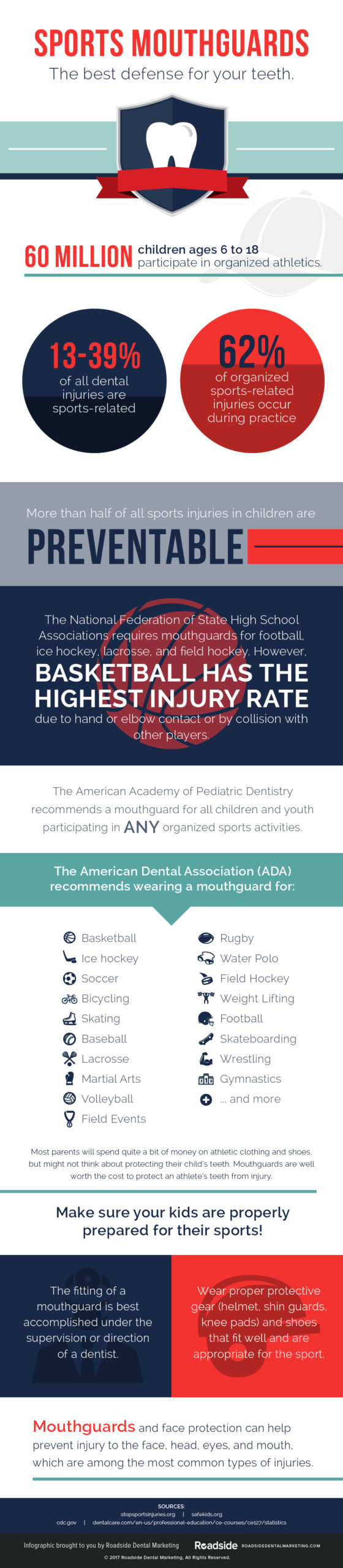
The American Dental Association recommends a mouthguard for any child playing a contact or collision sport, including football, hockey, basketball, and soccer, and notes that a properly fitted mouthguard is one of the most effective ways to prevent sports-related dental injuries.
Sources:
A well-fitted mouthguard is a small investment that protects your child’s smile through an entire season of practices and games. If your young athlete needs a custom-fitted mouthguard before their next season starts, contact our Mukilteo office to schedule a fitting.
Frequently Asked Questions About Sports Mouthguards
What sports actually require a mouthguard?
Contact and collision sports such as football, hockey, boxing, and lacrosse call for a mouthguard in nearly every league. Sports like basketball, soccer, and baseball carry a lower but still real risk, and many dentists recommend a mouthguard for these as well given how common falls and collisions are.
Why is a custom-fitted mouthguard better than a store-bought one?
A custom-fitted mouthguard is molded from an impression of your child’s teeth, so it stays securely in place, fits comfortably, and does not interfere with breathing or speaking. Stock and boil-and-bite versions from sporting goods stores tend to be bulkier and less secure, which makes kids more likely to remove them during play.
How often should a child’s mouthguard be replaced?
Most children need a new mouthguard every season, since growing jaws and shifting or emerging teeth change the fit over time. A mouthguard should also be replaced sooner if it develops holes, thins out, or no longer fits snugly.
How should we clean a mouthguard between uses?
Rinse the mouthguard with cool water or a small amount of mouthwash after each use, and let it air dry in a ventilated case rather than a sealed bag. Avoid hot water or leaving it in direct sunlight, since heat can warp the fit.
Can a mouthguard be used with braces?
Yes, and it is especially important for kids with braces, since a collision without a mouthguard can damage both the teeth and the orthodontic brackets. Your dentist can recommend a mouthguard style designed to accommodate braces safely.
About the Author
Family & Cosmetic Dentist
Dr. Johnson leads the team at Harbour Pointe Family Dentistry, providing family and cosmetic dental care to patients throughout Mukilteo and the greater Puget Sound area.


